

Why Black Art Needs Black Spaces

Black art has never needed help proving its influence. It lives in the images that shape fashion campaigns, in the visual language borrowed by brands, and in the stories institutions eventually decide are worthy of preservation. Black artists have long created work that moves culture forward, often without the luxury of permanence or the infrastructure afforded to others. The influence has always been undeniable. The access has not.
There is something deeply important about what happens when Black art exists beyond the scroll. Not simply as an image saved to a moodboard or reposted into a temporary story, but as something physical. Something that asks viewers to stand in front of it, sit with it, move through it, and experience the intention behind each placement, each texture, and each conversation happening between the works themselves. Black art has always thrived in community, but community requires places where culture can gather, reflect, and evolve.
That is what makes independent art environments, curatorial practices, and artist-led exhibitions so necessary right now. While visibility has expanded in undeniable ways, access to meaningful physical platforms for emerging and independent Black artists remains an entirely different conversation. Creating room for Black art is not simply about walls and square footage. It is about authorship. It is about context. It is about allowing work to be experienced the way it was intended.

There is a particular kind of care that exists within Black-led creative ecosystems. A different understanding of narrative, texture, memory, and what it means to hold work that comes from lived experience rather than observation. Places like these do more than present art. They preserve conversations. They create opportunities for experimentation, cultural documentation, emotional honesty, and new forms of storytelling to emerge without waiting for institutional permission.
That work extends beyond the artists themselves. Curators, creative collaborators, and independent cultural platforms all play a role in shaping the ecosystems that allow these moments to happen in the first place. Curator Camelia Denise’s involvement in VEHICLE. The Chosen Ones reflects that intention. Through her work with GUUD Studio, a cultural house committed to supporting artists and curators often left outside traditional art industry pathways and institutional white walls, the act of exhibition-making becomes its own form of cultural storytelling. Bringing people together around work, ideas, and shared reflection matters just as much as the work itself.
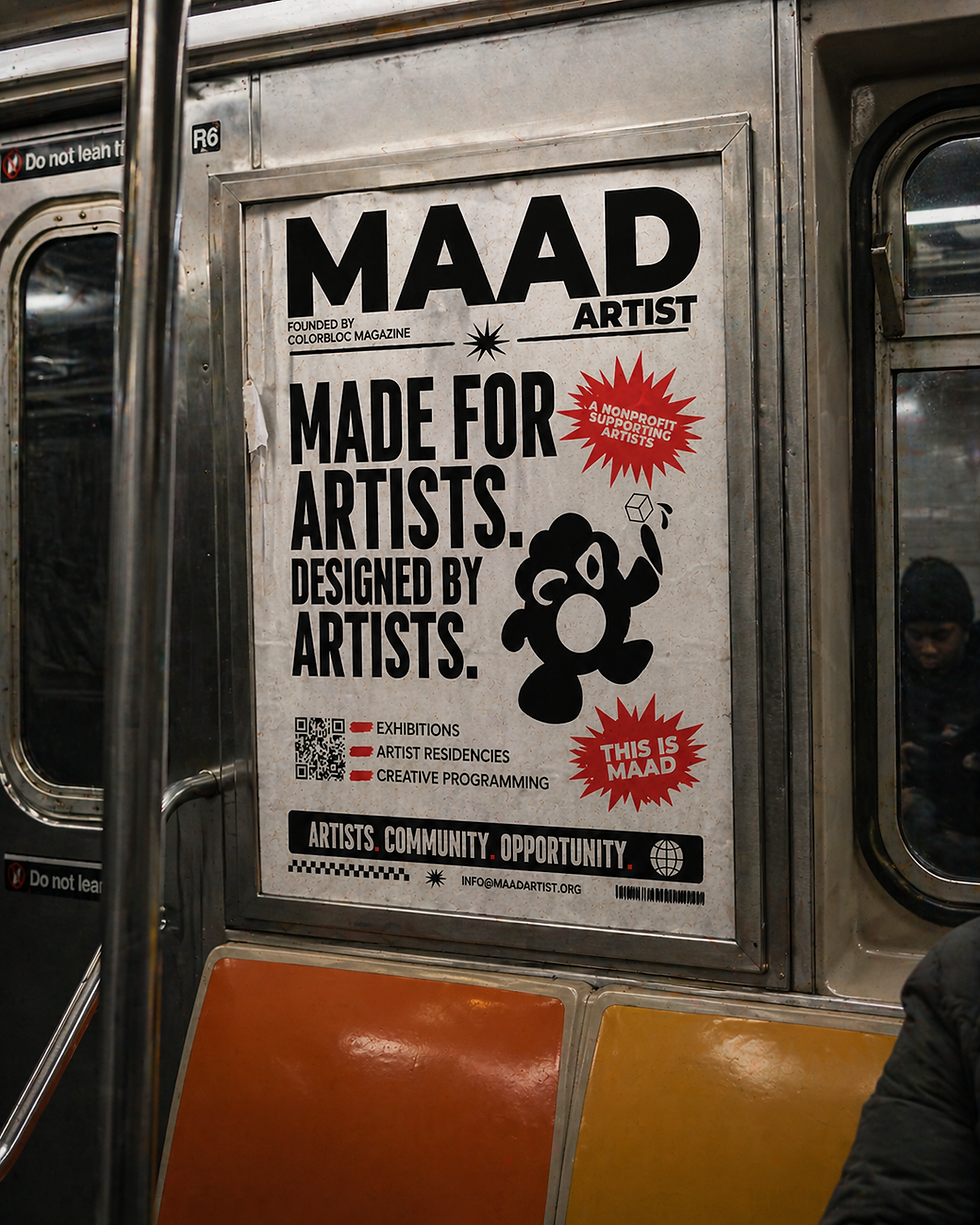
That same spirit lives within artist-led initiatives like MAAD Artist, which continue to explore what it means to create deeper engagement between artists and audiences. When artists are given room to expand their work beyond the page or the screen, something shifts. The relationship between audience and artist becomes more intimate, more immersive, and more honest.
Which is what makes Storm Cuff’s VEHICLE. The Chosen Ones feel especially timely. Storm’s work has long explored movement, identity, authorship, and cultural symbolism through a visual language that feels both intimate and expansive. VEHICLE is not simply about transportation in the literal sense. It interrogates Blackness as motion, momentum, force, and a cultural engine that continues to move the world while often being asked to do so without acknowledgment of the systems that make that movement possible.
There is a difference between seeing work online and encountering it in space. To stand in proximity to a body of work like this, to experience its scale, pacing, and emotional architecture, is to understand exactly why physical art spaces still matter. This June, that conversation takes physical form in Brooklyn as VEHICLE. The Chosen Ones opens its doors for an intimate reception, inviting audiences into the world Storm has built. Because some work deserves more than visibility. It deserves a space to be felt.


Comments