

The Black Archive: Preserving Black Memory

For generations, Black people have preserved the evidence of lives history did not always think worth recording. Photographs were kept before anyone called them archives. Funeral programs, church fans, newspaper clippings, letters, recipes, home videos and family albums remained in our homes without any expectation that they might one day become historically significant. Names were written on the backs of pictures. Images of relatives we never met passed from one generation to another. Boxes were inherited from people who were no longer here to explain everything inside them. Collectively, these materials became more than keepsakes. They became a record of ourselves.
Black history has never existed exclusively inside museums, universities or government records. Much of it has lived in homes, churches, Black newspapers, photography studios and neighborhood institutions, preserved by people whose names may never appear in a history book. Traditional archives have done essential work protecting historical material, but institutions have also held enormous authority over what was collected and ultimately recognized as significant. When our understanding of the past depends on what survives, preservation becomes more than memory. It shapes what future generations are able to know.

More than a century ago, Arturo Alfonso Schomburg understood what was at stake. The Black Puerto Rican historian and collector spent decades gathering books, manuscripts, prints and other materials documenting people of African descent at a time when Black intellectual and cultural contributions were routinely diminished. The New York Public Library acquired his collection in 1926, forming the foundation of what would become the Schomburg Center for Research in Black Culture. His collection made a larger argument: when history excluded Black achievement, preservation could provide the evidence that exclusion attempted to erase.
A similar instinct was unfolding inside Black households, though without institutional recognition. Grandmothers saved photographs. Aunts held onto funeral programs. Uncles arrived at gatherings with camcorders. Somebody knew the names of relatives pictured decades before anyone else in the room was born. Those collections captured dimensions of Black life that official records rarely could. A census can tell us who lived at an address. A family photograph can show us how they made that address a home.

Spend enough time with an old family photograph and your eyes eventually wander beyond the person you recognize. The hairstyle, clothing, furniture, wallpaper, television, jewelry, car parked outside or food sitting on the table begin telling their own stories. A house can reveal something about place and class. A hairstyle can locate an image within an era. A neighborhood in the background may no longer exist as it once did. Details that seemed insignificant when the photograph was taken become valuable because they preserve how people actually lived.

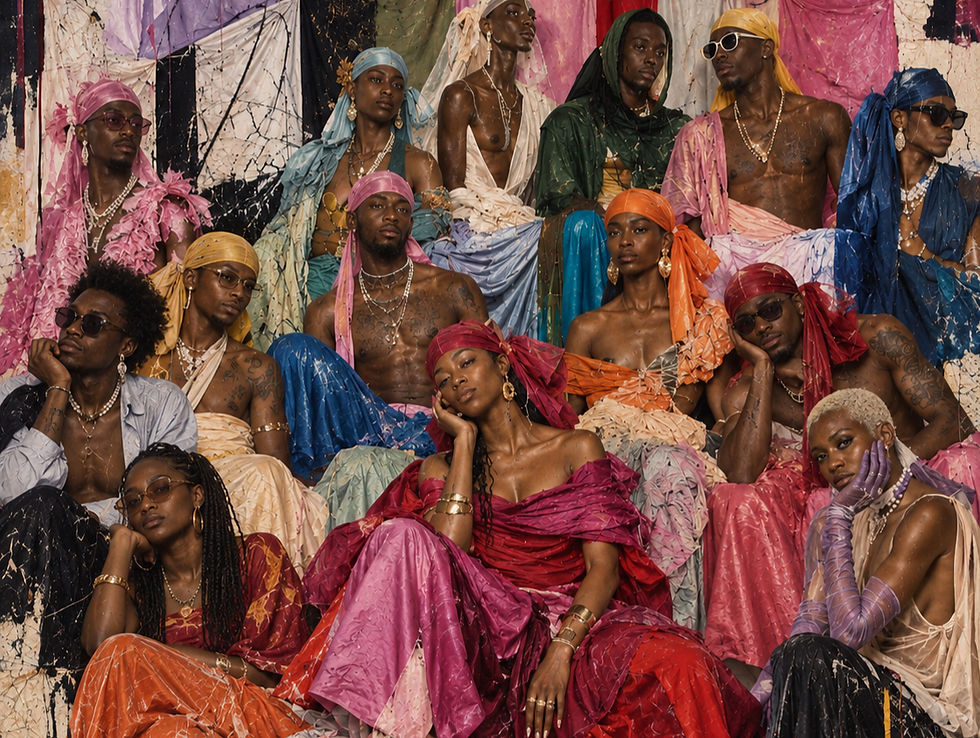
Contemporary Black artists have increasingly returned to family photographs, vernacular images, home movies and inherited objects with that understanding. Archival material can become photography, painting, collage, film or installation, allowing artists to examine not only what survived but what disappeared. Missing photographs, unidentified relatives and incomplete stories reveal the limits of the historical record itself. Rather than treating an archive as an unquestionable account of the past, artists can use its fragments to ask whose experiences were documented, whose were overlooked and who ultimately gets to shape the story that remains.
Loss is unavoidable in that conversation. Photographs disappear during moves. Letters are discarded after deaths. Albums are divided among relatives. VHS tapes deteriorate. Black businesses close without their records being preserved, neighborhoods transform and family stories disappear with the people who knew them. Sometimes the photograph survives while its meaning does not. Nearly every family has an image containing someone nobody can identify anymore. Keeping the object is not always the same as keeping the story.

Private memory becomes even more complicated once it enters public cultural spaces. A photograph can begin in someone's family album, appear decades later in an artist's work and eventually enter a museum collection. Relatives become subjects viewed by people who never knew them. Their clothes, homes and lives become material for interpretation. Preservation can protect fragile histories, but it also raises questions about ownership, context and authority. Who identifies the people pictured? Who tells their story? Who benefits when private Black memory acquires cultural or economic value?
Our generation faces another version of the problem. We may be producing more documentation of everyday Black life than any generation before us, yet we may not be preserving it any better. Phones contain thousands of photographs, videos, voice notes and conversations, but volume alone does not create an archive people can understand. Imagine someone opening your camera roll seventy years from now. The images may still exist, but without names, dates or stories, how much would they actually know? We could become one of the most documented generations in Black history while leaving behind one of its most disorganized records. Preservation does not always require an institution. Ask an elder who is pictured in the photograph. Record the story behind an object. Write down who created the family recipe. Digitize the album before it deteriorates and label the people after it is scanned. Save the program that seems insignificant today. Historical importance is often impossible to recognize while history is still happening, which is exactly why ordinary material deserves our attention.

Black memory has always been larger than what was officially recorded. It lives in museums and libraries, but it also lives in living rooms, churches, neighborhoods, camera rolls and boxes we have not opened in years. A family photograph does not need to enter a museum to become part of Black history, and an album does not need a curator to become an archive. These things already carry evidence of how we lived, who we loved, what we built and how we saw ourselves. What matters now is recognizing the value of what we are holding while there are still people here who can tell us what it means.


Comments