

The Black & Elegant by De’marrea Frazier

There is no singular way to look Black, to dress Black, or to move through the world as a Black person. Across continents, cities, neighborhoods, and generations, Black identity carries an extraordinary range of cultural expressions, personal histories, traditions, and aesthetics. What connects us does not erase what distinguishes us. Our differences are part of the beauty of Blackness itself, expressed through the textures of our hair, the richness of our skin, the clothes we choose, the spaces we inhabit, and the countless ways we carry ourselves. For photographer De’marrea Frazier, that diversity is the foundation of The Black & Elegant, a photographic series celebrating the elegance and vitality he recognizes in Black people around the world.


Photography has long played a role in how Black people express identity, beauty, and personal style. In the United States, Black participation in photographic portraiture reaches back to the earliest decades of the medium. By the 1840s and 1850s, photographers including James Presley Ball, Glenalvin Goodridge, and Augustus Washington were operating portrait studios, creating images that offered a different vision of Black life from the degrading representations circulating in the wider culture. That tradition continued through the work of James Van Der Zee in Harlem and Addison Scurlock in Washington, D.C., whose photographs captured the significance of clothing, hairstyles, family relationships, and personal presentation. Beyond the United States, photographers such as Seydou Keïta and Malick Sidibé in Mali would bring their own distinct perspectives to portraiture, documenting the fashion, personalities, and evolving cultural identities of their communities. Although these photographers worked in different places and historical circumstances, their images reveal the enduring relationship between photography and the ways Black people choose to present themselves. That relationship finds a contemporary expression in De’marrea Frazier's The Black & Elegant, where clothing, hair, posture, and environment become part of a larger celebration of Black individuality.


Photography has long played a role in how Black people express identity, beauty, and personal style. In the United States, photographers including James Presley Ball, Glenalvin Goodridge, and Augustus Washington established portrait studios during the nineteenth century, creating images that challenged the degrading representations of Black people circulating throughout American visual culture. Later, James Van Der Zee in Harlem and Addison Scurlock in Washington, D.C., photographed generations of Black families, artists, and community members with an attention to clothing, hairstyles, relationships, and personal presentation. Across the Atlantic, photographers such as Seydou Keïta and Malick Sidibé in Mali developed their own distinctive approaches to portraiture, capturing the fashion, personalities, and changing cultural identities of the people around them. Their photographs reflected the creativity and social life of their communities, revealing how personal style could become an expression of individuality and cultural belonging. Though separated by geography, generations, and historical circumstances, these photographers contributed to a rich visual tradition in which Black people could participate in shaping how they were seen. De’marrea Frazier's The Black & Elegant enters this broader conversation through its celebration of clothing, hair, posture, and environment as expressions of Black beauty and identity.

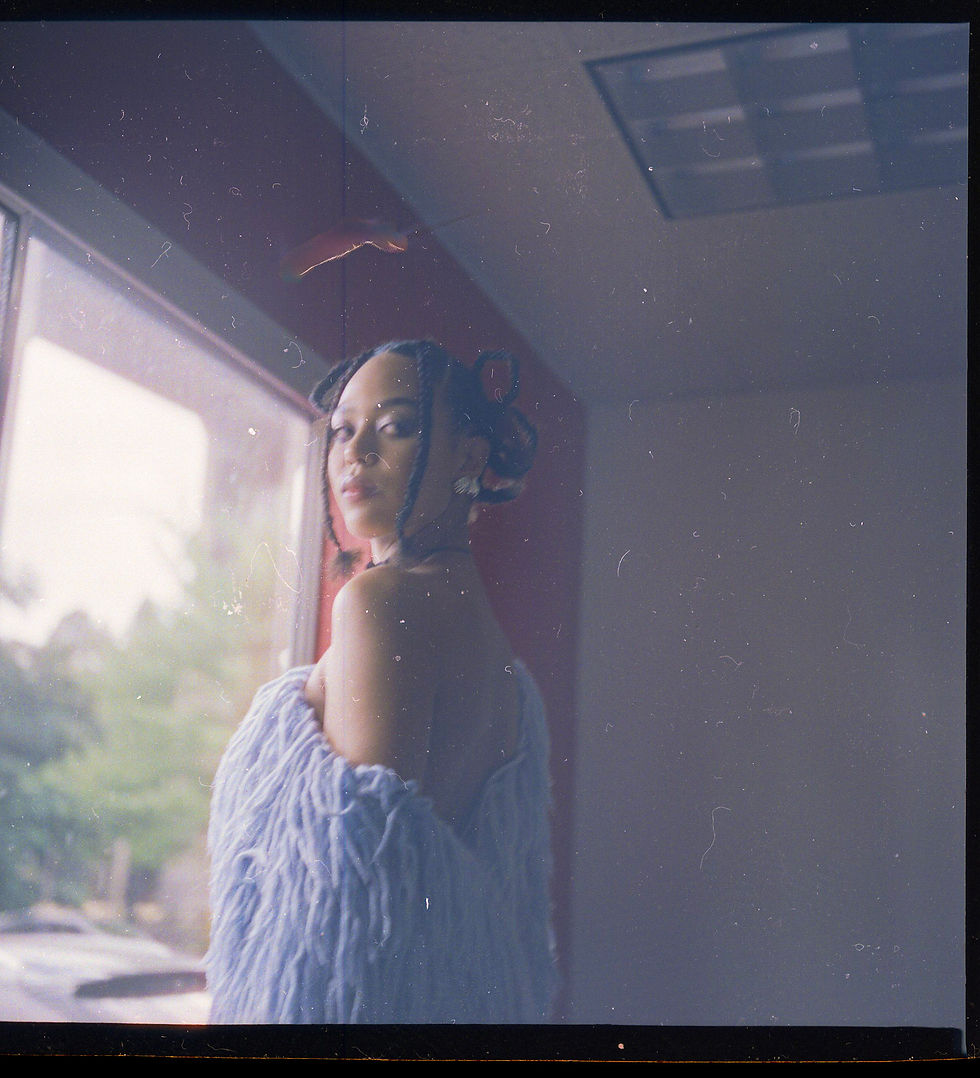
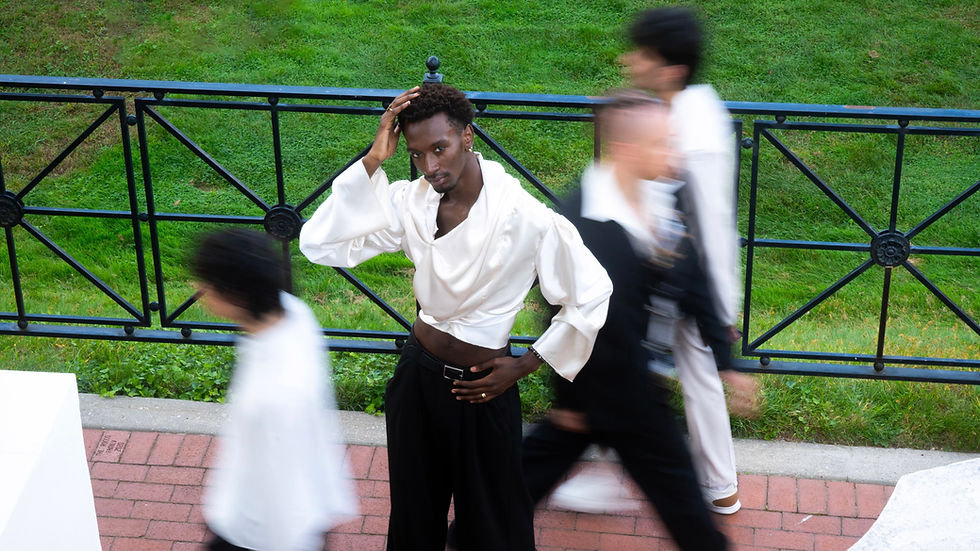
Throughout the series, Frazier places carefully styled subjects within environments rarely associated with traditional images of luxury and refinement. Tailoring appears on residential streets and sidewalks, while fur, jewelry, and considered styling exist alongside apartment buildings, storefronts, and neighborhood markets. Other photographs move into controlled portraiture, where dark backgrounds, deliberate posture, braided hair, and sculptural garments create images reminiscent of painted portraits. The movement between these environments is essential to the project's visual language. Frazier does not suggest that a neighborhood becomes elegant because a well-dressed subject has entered it, nor does he present everyday surroundings as something to escape in pursuit of refinement. Instead, his photographs recognize elegance as something that exists independently of setting, expressed through the individuality, confidence, and personal style of the people before his camera. A tailored suit does not become less refined because the pavement beneath it is cracked, just as an intricately arranged hairstyle does not require a runway or luxury interior to command attention. In The Black & Elegant, the person and the environment exist in conversation, each contributing to a portrait of Black life that is both familiar and visually compelling.

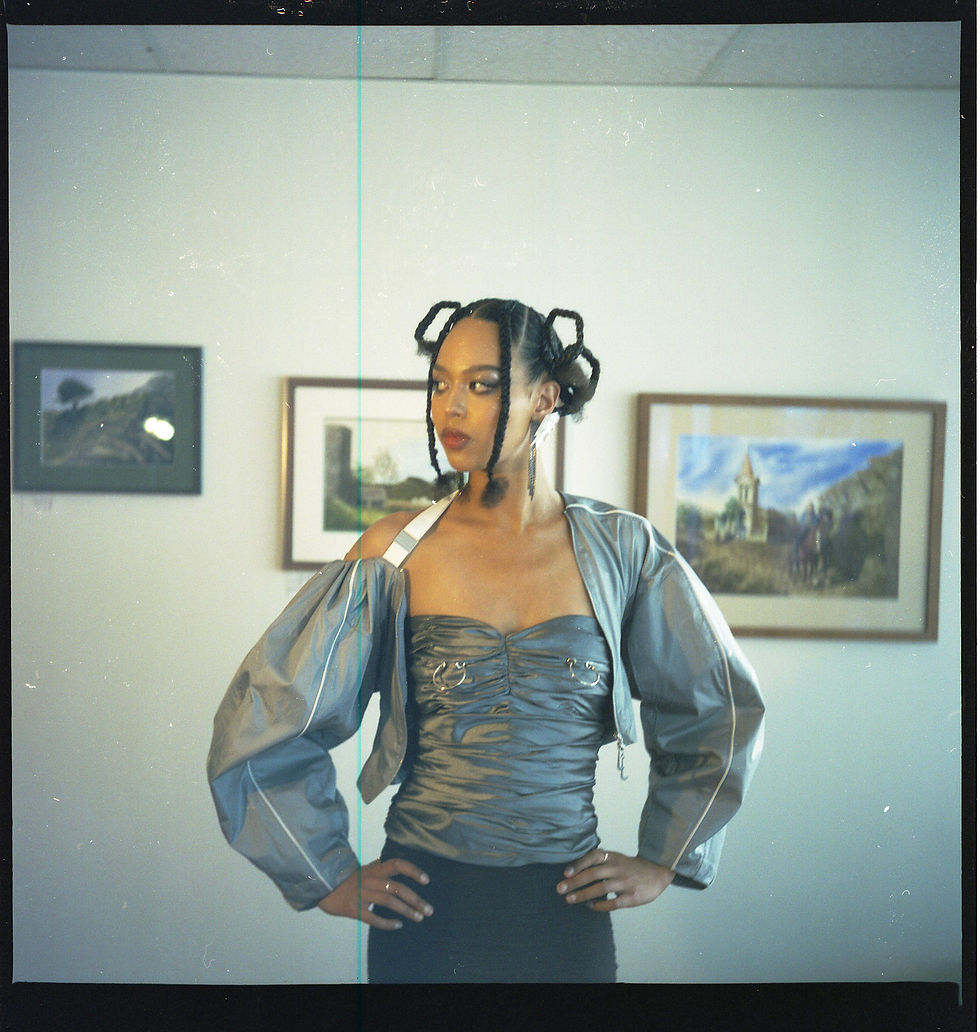

Clothing has long served as a language of identity within Black communities, communicating aspiration, rebellion, belonging, pleasure, and individuality, sometimes simultaneously. The history of Black dandyism reveals how dress could become a means of self-definition, allowing Black people to construct and express identities beyond those imposed upon them. The Metropolitan Museum of Art's 2025 exhibition Superfine: Tailoring Black Style, inspired by scholar Monica L. Miller's research, explored this relationship across centuries, examining how clothing has shaped expressions of Black identity and cultural influence. That history gives the tailoring in Frazier's photographs particular resonance, but his visual exploration extends beyond the suit. Formalwear exists alongside contemporary fashion, expressive accessories, and personal styling, reflecting a culture in which elegance is continually interpreted and reinvented. Rather than presenting refinement as a fixed aesthetic, his photographs celebrate the creativity and individuality that have always shaped Black style.

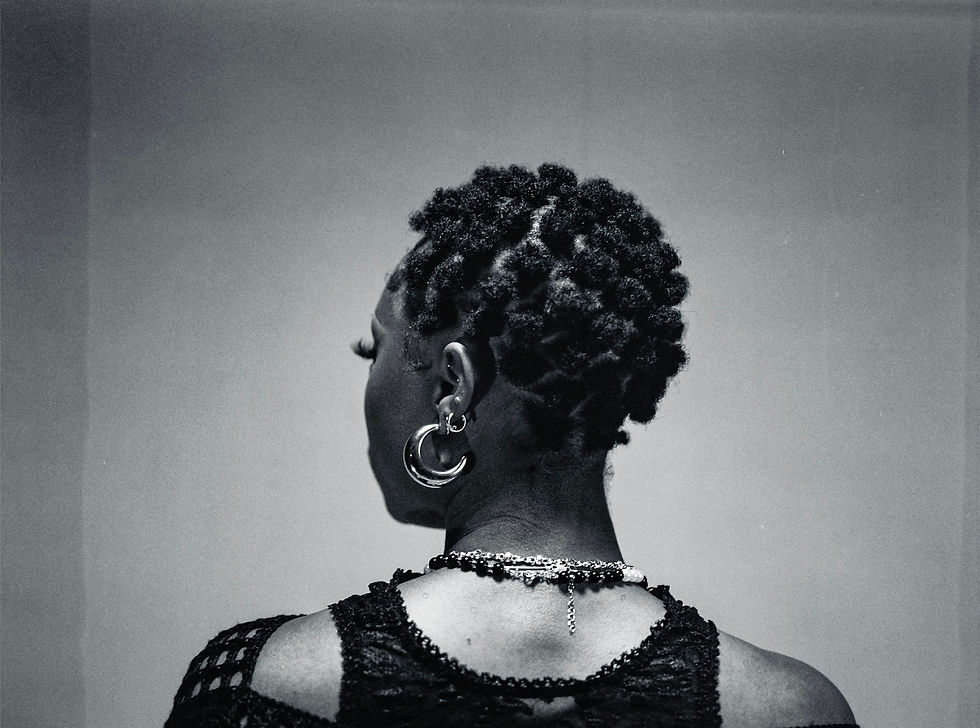
Hair brings another dimension to this conversation, carrying histories of cultural identity, creativity, and personal expression that extend far beyond appearance. Black hair has been politicized, regulated, imitated, and commercialized, yet it remains one of the most intimate and inventive expressions of Black culture. Hair can carry memory before it ever becomes fashion. It can recall the hands of a parent, a childhood salon, hours spent in a barber's chair, or the experimentation through which people discover how they want to present themselves. Across generations and communities, braiding, natural textures, and intricate styling have developed into distinctive forms of artistry, shaped by tradition as well as individual imagination. In Frazier's portraits, braids and sculptural hairstyles become part of the architecture of the image, extending silhouettes and commanding visual space rather than functioning as secondary details. Their presence reflects the beauty and craftsmanship embedded in Black hair traditions, allowing cultural identity and personal style to exist as equally important expressions of elegance.


The history of Black fashion also complicates the idea that Black elegance becomes significant only when a mainstream institution recognizes it. In 1979, Lois K. Alexander Lane founded the Black Fashion Museum in Harlem to collect, document and preserve the contributions Black people had made to fashion, building a collection that eventually included thousands of garments, textiles, accessories and archival materials. The collection, now held by the Smithsonian’s National Museum of African American History and Culture, preserves work associated with designers and makers whose contributions belong within a much broader history of American fashion. Its existence makes an important point that extends beyond clothing: Black elegance is not a trend being rediscovered. It has an archive. Black people have been designing, styling, sewing, photographing, collecting and preserving our own visual cultures across generations, even when the institutions responsible for defining fashion history failed to treat those contributions with the same seriousness afforded to others.


Recognizing the cultural significance of presentation also means acknowledging the expectations that have sometimes accompanied it. Throughout American history, elegance has carried the burden of respectability, particularly in environments where Black people understood that appearance could influence their access to opportunity, acceptance, and even safety. Immaculate presentation could be an expression of pride and pleasure while also serving as a strategy for navigating a society shaped by racial stereotypes. There is an important distinction between choosing elegance as an expression of identity and feeling required to demonstrate refinement as evidence of one's worth. Although Frazier's work does not explicitly address these histories, his photographs offer a different emphasis. His subjects are presented through their individuality, with clothing, hair, and posture contributing to images that celebrate personal expression rather than seeking approval. Elegance becomes something experienced and enjoyed, rather than a standard against which Black identity must be measured.

Frazier's photographic approach reinforces that sense of individuality through a range of compositions and visual styles. Some portraits are tightly framed, giving the subjects an almost monumental presence, while others allow figures to occupy a smaller portion of the image, bringing greater attention to the surrounding architecture and atmosphere. His use of color and black and white creates different visual experiences, moving between rich textures, dramatic contrasts, and carefully considered arrangements of light and form. The series draws from fashion photography, street photography, and formal portraiture without adhering exclusively to any one tradition. This variety allows each image to develop its own character, reflecting the different personalities, settings, and expressions that inspired the work. Rather than repeating a single visual formula, Frazier builds a collection whose strength emerges from the relationship between its individual photographs.

There is also something significant about making these photographs in the present. Neighborhoods change, fashion evolves, and hairstyles become visual markers of the generations that embraced them. What feels entirely contemporary today may eventually reveal something about the cultural expressions and everyday environments of this moment. Frazier's photographs capture more than carefully considered styling. They bring together the architecture of familiar neighborhoods, the textures of clothing, the artistry of Black hair, and the individuality of people expressing themselves within their own time. While these images may one day offer a glimpse into the aesthetics and cultural life of a particular generation, their immediate significance lies in the beauty and vitality they recognize in the present. They celebrate Black life as something continually evolving, shaped by the people who live it and the creativity they bring to its everyday expressions.

Perhaps the most compelling quality of Frazier's work is its understanding that Black elegance has never belonged to a single aesthetic, environment, or way of life. The neighborhood does not diminish the fashion, just as the fashion does not erase the neighborhood. Each photograph brings together different expressions of identity, allowing clothing, hair, posture, and personal style to exist within the environments and experiences that give them meaning. Across the African continent and its diaspora, Black people have continually shaped their own expressions of beauty through culture, creativity, tradition, and individuality. Frazier's photographs contribute to that ongoing conversation by celebrating the richness of those differences and the connections that exist between them. What emerges is a vision of elegance that is neither prescribed nor confined, but found in the extraordinary variety of Black life itself. The beauty of Blackness has never depended on our ability to look, dress, or live alike. It exists in the many ways we express who we are.
The Black & Elegant by De’marrea Frazier will be featured in ColorBloc Magazine Issue 18, arriving March 2027. The print edition will expand on the project with an in-depth interview with Frazier and additional photography, offering a closer look at his creative vision and the inspiration behind the series.
Stay Connected with De'Merrea Frazier


Comments