

Black Portraiture: The Art of Being Seen

There are few subjects in art history as enduring as the portrait. For centuries, portraiture has served as a record of power, status, wealth, and identity, preserving how individuals wished to be seen and remembered. Yet for much of that history, Black subjects were either excluded from these narratives or relegated to the margins of them. Over the last several decades, Black artists have fundamentally transformed the tradition of portraiture, expanding not only who appears within the frame, but what a portrait can communicate.

Portraiture has long been associated with visibility, but visibility alone was never the issue. The question has always been who controls the image. Black artists have challenged historical conventions by creating portraits that move beyond documentation and representation, using the genre as a space to explore identity, memory, community, and cultural authorship.

Few artists have had a greater impact on this shift than Barkley L. Hendricks. Working throughout the 1960s and 70s, Hendricks created large-scale portraits that centered Black subjects with a confidence and presence rarely afforded to them in Western art history. His paintings rejected the notion that Black life needed explanation or justification. Instead, his subjects stood unapologetically within the frame, commanding attention through style, posture, and individuality. In many ways, Hendricks helped establish a visual language that would influence generations of artists to come.

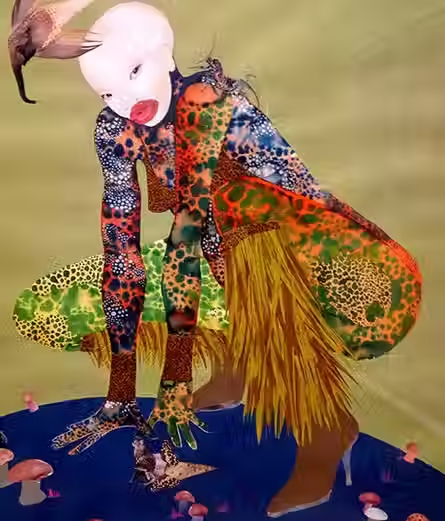
That influence can be seen in the work of Kehinde Wiley, whose monumental portraits place contemporary Black subjects within compositions historically reserved for royalty, aristocrats, and military leaders. By borrowing from the visual traditions of European portraiture while replacing its subjects, Wiley forces viewers to reconsider who has historically occupied positions of power and prestige. His work is as much about art history as it is about the present moment.
Amy Sherald approaches portraiture from a different perspective. Known for her distinctive use of grayscale skin tones and vibrant color palettes, Sherald creates portraits that feel both familiar and dreamlike. Her work shifts attention away from race as spectacle and toward the individuality of her subjects, allowing them to exist outside the expectations often imposed upon Black representation. Through this approach, Sherald creates images that feel deeply personal while carrying broader cultural significance.
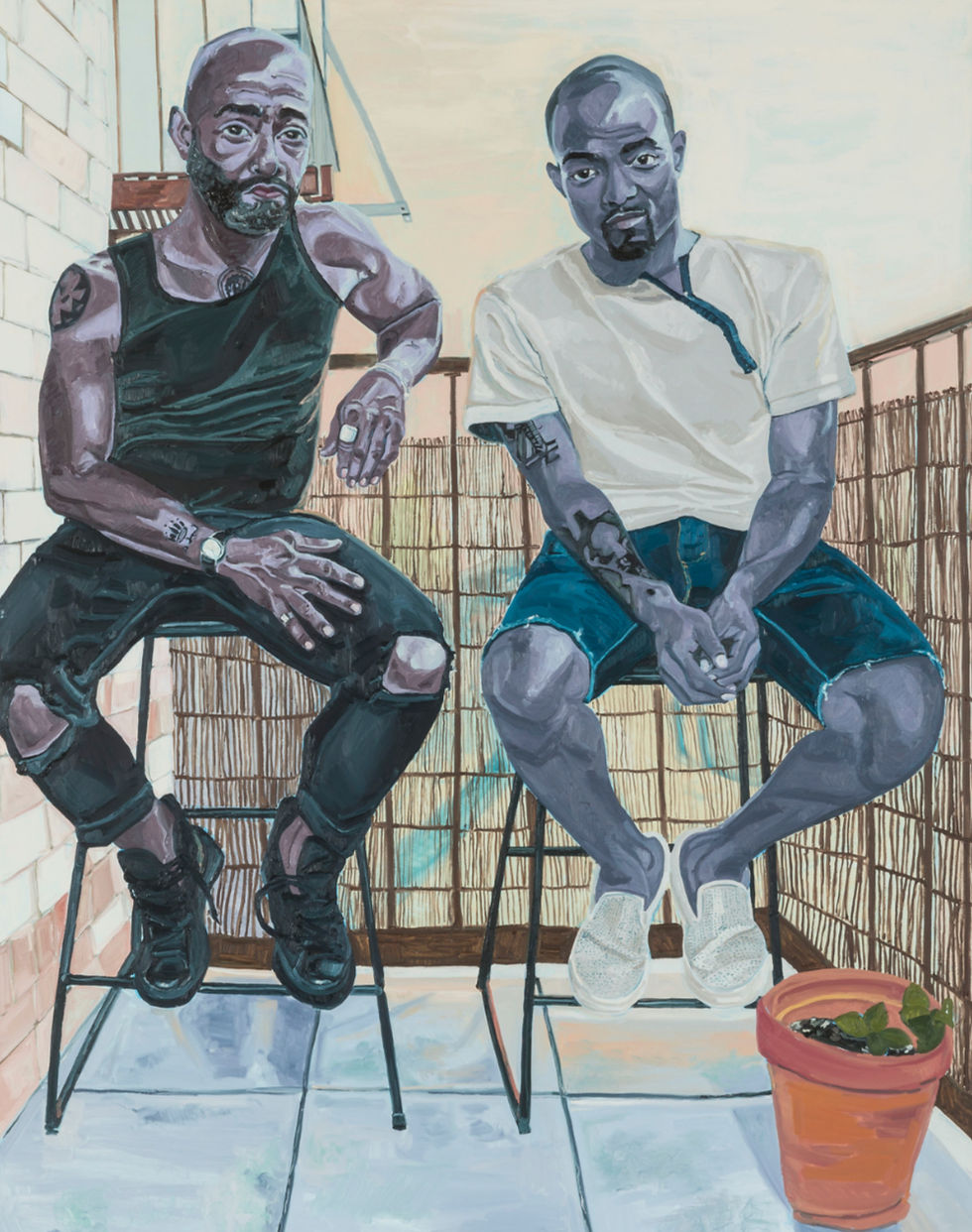
More recently, artists such as Jordan Casteel have expanded portraiture's possibilities by focusing on everyday encounters and community. Her paintings capture neighbors, friends, and strangers with an intimacy that challenges traditional hierarchies of importance. In doing so, she reminds viewers that portraiture is not reserved for the famous or powerful. It can also be a record of ordinary life and shared humanity.

What connects these artists is not simply their choice of subject matter but their understanding of portraiture as a site of authorship. Their work demonstrates that portraits are never neutral images. They shape how individuals are remembered, how communities are represented, and how history is constructed. By reclaiming and redefining the genre, Black artists have expanded portraiture beyond likeness and into something far more complex.
Today, the influence of Black portraiture can be seen throughout contemporary art, fashion, photography, and visual culture. The genre has become a space where identity is explored rather than fixed, where history can be challenged rather than accepted, and where new possibilities for representation continue to emerge. Viewed in this context, the contribution of Black artists to portraiture extends far beyond the canvas. They have transformed the language of the genre itself, creating images that do more than depict a subject. They ask who gets to be seen, who gets to be remembered, and who has the power to shape the image in the first place.


Comments